
Table Of Contents
How Are Bicycle Lights Tested Before Mass Production?
Bicycle lights should be tested against a controlled product specification before mass production, not against a generic list of laboratory machines. The validation plan normally covers optical output and beam distribution, runtime and charging, battery behavior, water ingress, temperature, drop and vibration, mount retention, buttons and connectors, plus packaging and production inspection. Each check needs an identified sample, method, condition, acceptance rule and recorded result.
The final release decision should connect the approved sample to the bill of materials, drawings, firmware or mode logic, artwork, packaging and test records. An integrating sphere, water chamber or vibration table shows that a facility can perform a type of evaluation; it does not by itself prove that a particular bicycle light was tested, which method was used or whether the result passed.
What Does Bicycle Light Quality Testing Before Mass Production Cover?
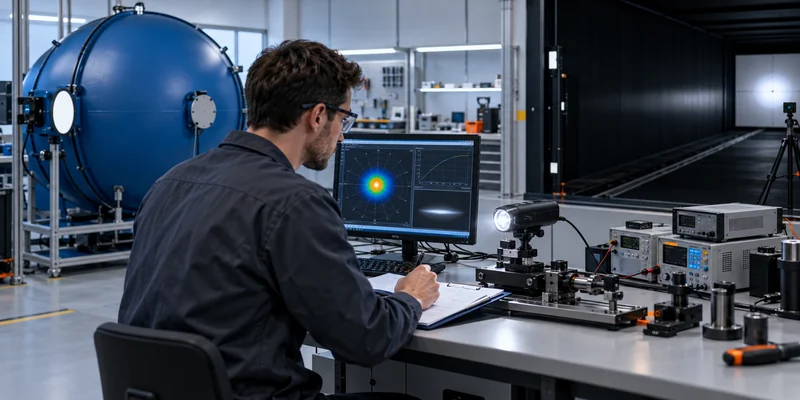
Bicycle light quality testing should answer four different questions. Optical tests determine what light the product emits and where the beam goes. Electrical tests examine runtime, charging, indicators and power behavior. Environmental and mechanical tests challenge the enclosure, mount and user interfaces. Production controls then check whether the approved design can be built repeatedly with the specified parts, assembly and packaging.
The test set must follow product risk and intended use. A bicycle front light for an unlit road needs meaningful beam-distribution and sustained-output evidence. A compact rear visibility light may require different viewing-angle and signaling checks. A rechargeable product adds cell, charging and battery-document requirements; a handlebar or seatpost mount adds fit, slip and vibration questions. Applying every available test to every model is neither evidence-based nor efficient.
Use a gate structure: approve the specification and test plan, evaluate development samples, confirm corrective actions, build production-equivalent or pilot samples, repeat the release-critical checks, then authorize mass production. Keep open deviations visible rather than accepting a sample informally and reconstructing the decision later. For how this testing fits the wider development workflow, see the custom bicycle light development checklist.
Build a Bicycle Light Quality Testing Plan From the Approved Sample
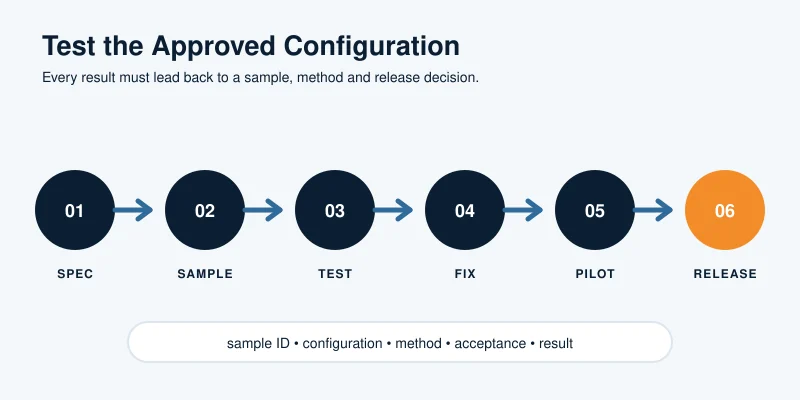
Begin with one controlled configuration. Record the model, sample ID, hardware revision, optical components, LED, driver or firmware version, battery, mount, seals, finish and pack contents. Link those identifiers to the drawing, bill of materials and product specification. If a tested sample differs from the build to be ordered, the responsible engineer must decide whether the result still applies.
Translate each requirement into a measurable check. “Bright beam” becomes output and beam-distribution criteria under named conditions. “Long runtime” becomes an output-versus-time test for the required mode and endpoint. “Strong mount” becomes fit, retention, angle-holding and vibration acceptance. “Waterproof” becomes an agreed ingress test and post-test inspection. The plan should define sample quantity, conditioning, equipment or external laboratory, measurement uncertainty where relevant and the treatment of failures.
Prioritize tests by risk. A new enclosure or mount may need wider mechanical validation than a logo-only change to an approved platform. A new cell or charge circuit can reopen runtime, thermal and battery checks. A change to a seal, adhesive, surface treatment or connector may require targeted environmental retesting. Document why a previous result is accepted or why a test is repeated.
Measure Bicycle LED Lights Output, Beam Pattern and Runtime
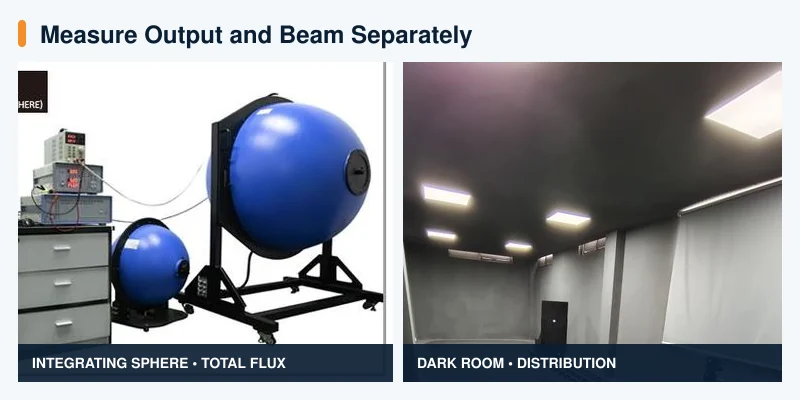
For bicycle LED lights, total output and beam quality are related but not interchangeable. An integrating sphere can be used to measure total luminous flux, usually reported in lumens. The result depends on the measurement system, calibration, sample setup and operating condition. A dark room or controlled target is used to study intensity, distribution, cutoff, foreground uniformity and useful reach. A single center-point lux reading cannot describe the entire beam.
Measure each release-critical mode after defining battery state, ambient temperature, airflow or fixture, warm-up time and any thermal step-down. High performance bicycle lights can produce a short peak followed by lower sustained output; both may matter to the buyer. The current ANSI/PLATO FL 1-2025 standard introduced a standardized approach for short-duration elevated brightness in portable lights, but an RFQ or report should still name the edition and metrics actually applied. CONWICO should not claim FL 1 compliance for a model without the matching record.
Runtime testing should capture output over time, not only the shutdown time. State the mode, start condition and endpoint, and show when step-down or low-battery behavior occurs. Then evaluate the beam on a bicycle in the intended environment. Published bicycle-light research has combined indoor measurement, outdoor visibility work and dynamic evaluation because no single method captures every aspect of seeing, being seen, glare and rider use.
Verify Rechargeable Bike Light Battery and Charging Performance
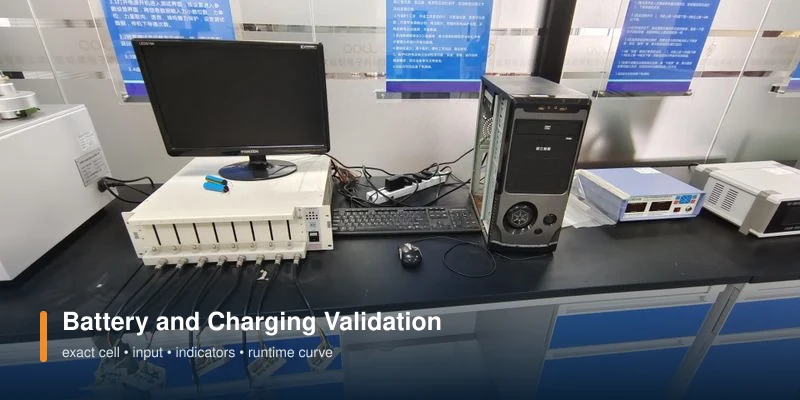
A rechargeable bike light validation plan should verify the exact cell or pack, charging circuit and finished-product configuration. Record nominal capacity and voltage, but do not convert mAh directly into hours. Measure runtime in the modes buyers will publish, monitor output and temperature, and confirm the battery indicator and low-power response at defined decision points.
Charging checks should cover the stated input, connector, cable assumptions, charge time, termination behavior, indicators and operation after charging. For USB rechargeable bike lights, USB-C describes a connector; it does not automatically prove fast charging, USB Power Delivery or safe use while the light is operating. If any of those functions is part of the specification, test it explicitly with defined power sources and acceptance limits.
Cell grading or incoming checks can help control consistency, but the production specification must identify the approved cell and substitution process. Lithium-battery transport evidence is a separate requirement. UN Manual of Tests and Criteria subsection 38.3 addresses transport testing for lithium cells and batteries; it does not establish the bicycle light’s runtime, beam, water resistance or mechanical durability. Buyers should request the applicable test summary and shipping information for the exact battery configuration.
Check Bicycle Light Waterproofing With a Defined Ingress Test
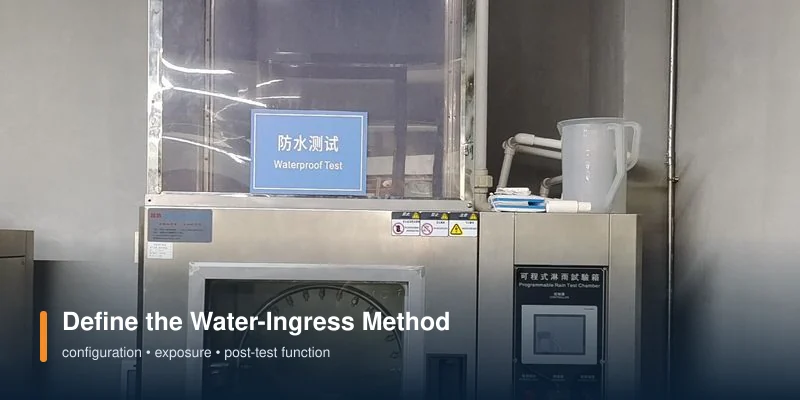
A bicycle light waterproof test needs a rating or project method, test configuration and post-test acceptance rule. The IP code developed under IEC 60529 separates protection against solids from protection against liquids. In an IPX6 designation, the second character addresses water ingress, while X means no dust-protection grade is stated. It is inaccurate to expand IPX6 into a dustproof claim.
Record whether the light is tested with its mount, battery, port cover and other removable parts in the production configuration. Define conditioning, water method, duration, orientation and any operation during the test according to the chosen standard or project requirement. After exposure, inspect for harmful ingress, lens fogging, corrosion or seal displacement, then repeat functional, charging and optical checks as required.
Water testing should follow mechanical preconditioning when the agreed method calls for it or when the risk plan needs it. A new port cover, seal, screw torque, adhesive or housing interface can change the result. One successful model or sample does not authorize a claim for every bicycle light produced by the same factory.
Test Bicycle Light Mounting, Drop, Vibration, Buttons and Connectors
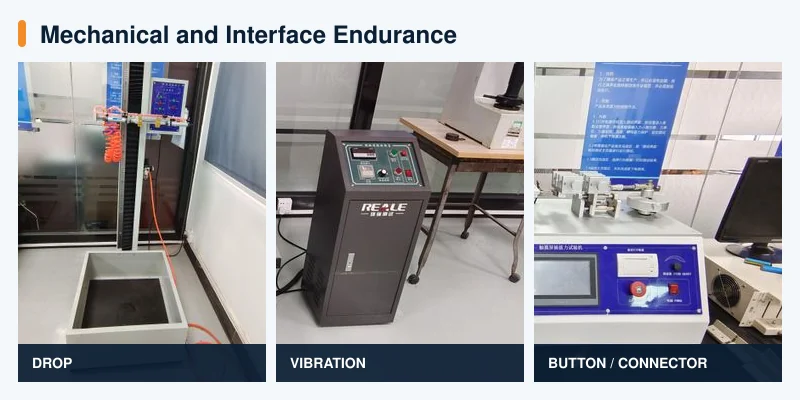
Mechanical tests should represent how the product is carried, installed and ridden. A drop test needs a defined height, orientations, surface, sample condition and post-drop inspection. A vibration test needs the fixture, axis, profile, duration and mounted mass. For a bicycle front light, verify that the mount retains the product and its aim without cracking, loosening or releasing. Inspect the housing, lens, seals, switch, connector and charging function after the challenge.
Mount evaluation should also include compatible tube dimensions, installation force, repeated fitting, angle adjustment, quick release and operation with gloves where relevant. A product can remain electrically functional yet fail the rider if the beam rotates downward, the strap wears quickly or the release becomes unsafe.
Buttons and charging connectors are repeated-use interfaces. Cycle tests should use the production geometry and specify actuation force or insertion conditions, number of cycles and failure criteria. Do not publish a cycle-life number merely because a machine exists. The report must show that the exact component and configuration were tested to that requirement.
Use Temperature and Salt-Spray Tests for Relevant Bicycle Lights
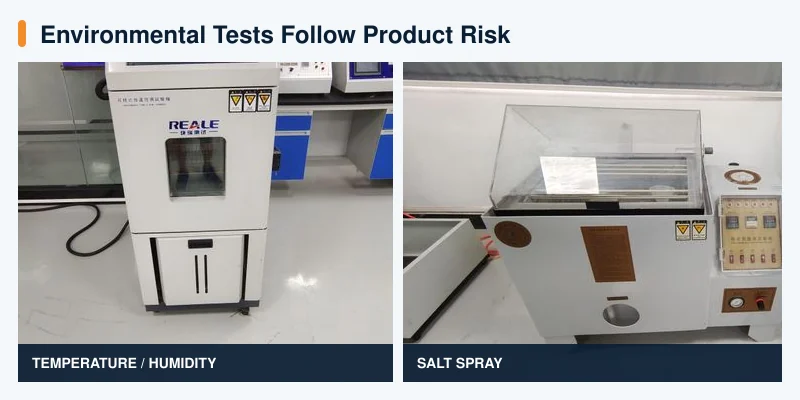
Temperature tests can reveal changes in output regulation, charging, indicators, seals, adhesives, plastics and battery behavior. Define the high and low conditions, dwell time, operating or storage state, recovery period and post-test checks from the intended market and components. Avoid quoting a temperature range until it is supported for the finished product; a component datasheet alone may not establish system performance.
Salt-spray testing may be relevant to exposed metal parts, coatings, fasteners or electrical contacts, particularly where corrosion resistance is a stated requirement. It is not a universal proof of outdoor life. The test method, preparation, duration and acceptance criteria must match the material, finish and claim. Inspect appearance, corrosion at edges or interfaces and any effect on function or assembly.
Environmental tests for bicycle lights should be selected as a connected risk set. Temperature can affect seals and batteries; mechanical stress can affect water resistance; corrosion can affect contacts and fasteners. Sequence and preconditioning therefore belong in the test plan rather than being left to an equipment operator after samples arrive.
Run Pilot Production and Bicycle Light Quality Inspection
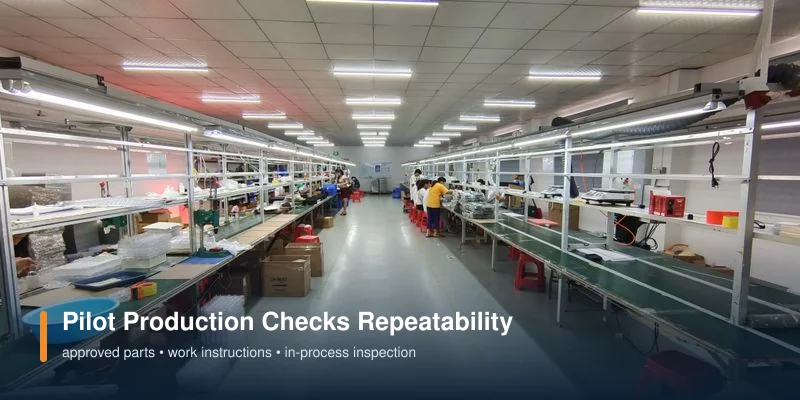
Passing development samples does not prove that mass production will repeat the result. A pilot or production-equivalent build checks the actual parts, tooling, work instructions, assembly sequence, torque or dispensing controls, firmware loading, inspection fixtures and packaging. The approved sample and controlled files should be available at the line so operators and inspectors are comparing against the same reference.
Incoming inspection should focus on critical components such as LEDs, optics, cells, electronics, seals, housings and mounts according to project risk. In-process checks can catch assembly, sealing, charging and mode errors before the finished unit is packed. Final inspection should cover identity, appearance, operation, modes, indicators, charging, included accessories, labels and package contents.
Define the sampling plan and acceptance numbers for the order instead of writing “standard AQL” with no level or defect classes. Separate critical, major and minor defects where the quality agreement requires it. Keep release-critical performance verification distinct from routine line inspection: a quick function check cannot replace a controlled beam, runtime or ingress test.
What Bicycle Light Quality Testing Records Should Buyers Request?
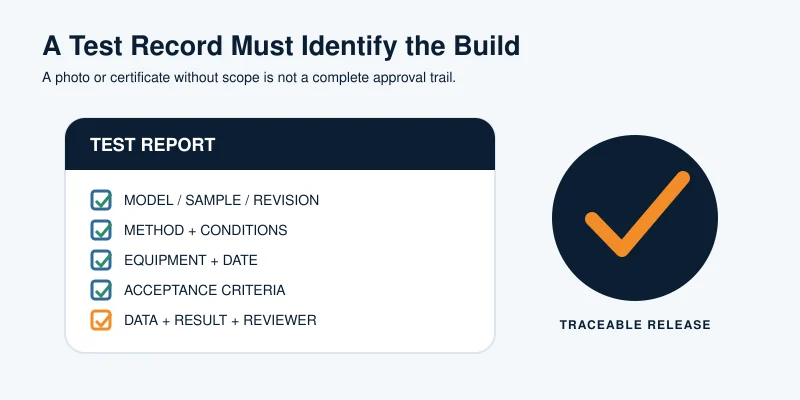
A useful test report lets another reviewer identify what was tested and reproduce the decision. It should include the project and model, sample IDs, configuration and revision, date, method or standard edition, equipment and calibration status where applicable, test conditions, raw or summarized data, photographs, acceptance criteria, result and reviewer. Deviations and retests should remain visible.
The buyer should also receive a closure trail for failures: issue description, containment, root-cause analysis at an appropriate level, corrective action, changed file or component, verification result and approval. When a supplier proposes a substitution after approval, assess its effect on optical, electrical, environmental, mechanical and documentation requirements before release.
Do not treat a certificate, laboratory logo or equipment photograph as a complete answer. Verify the model and configuration scope, issuing party, date, standard, result and any limitations. A bicycle light manufacturer can build trust by showing the connection between the ordered product, controlled specification, approved sample and evidence—not by presenting the longest possible test list.
CONWICO Bicycle Light Testing Capabilities: What the Evidence Shows
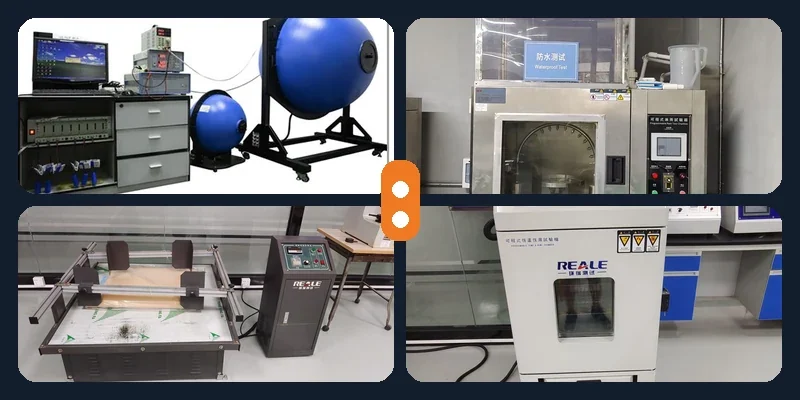
CONWICO’s supplied factory documentation identifies a product inspection center and shows equipment for dimensional measurement, high- and low-temperature exposure, water testing, drop testing, transport vibration, battery grading, connector cycling, button-life testing, salt spray, integrating-sphere measurement and dark-room optical evaluation. The live OEM/ODM page also describes prototype validation, sample approval, functional checks and final inspection. This equipment sits within the broader process described under CONWICO outdoor lighting manufacturing.
This supports an evidence-based statement about available inspection and test resources. It does not establish the method, calibration, sample count, acceptance limit or pass result for a specific product. Before a buyer uses any output, runtime, IP, durability or compliance claim, CONWICO should provide or agree the project-specific method and the record for the exact model and configuration.
For the OH1C-600, the supplied manual lists a 600-lumen maximum, 85-degree flood beam, 2500 mAh 18650 battery, Type-C 5 V/1 A input, five modes and IPX6. Those are model-specific documented specifications, not proof that the entire bicycle-light range shares the same values or test evidence. Any public test claim should cite the relevant model report and reconcile conflicting manual fields before publication.
Bicycle Light Quality Testing FAQ
What tests should be completed before bicycle light mass production?
Use a risk-based plan covering the approved specification. It may include optical output and beam, runtime, charging and battery behavior, water ingress, temperature, drop, vibration, mount retention, buttons, connectors, corrosion, packaging and pilot-production inspection. The exact set depends on the design, market and claims.
Does an integrating sphere test a bicycle light beam pattern?
An integrating sphere is primarily used to measure total luminous flux. Beam distribution, intensity, cutoff and reach require a controlled dark-room or target-based method. Use both types of evidence when the product claim requires both output and beam quality.
Is IPX6 a dustproof rating for a bicycle light?
No. In IPX6, the X means a solid-particle protection grade is not stated, while 6 identifies the liquid-ingress level. Do not describe IPX6 as a dust rating.
Is a pre-production sample enough to approve mass production?
It is necessary but not sufficient. The approved sample must link to controlled specifications, parts and files, and a pilot or production-equivalent build should confirm that the manufacturing process can repeat the accepted result.
What should a bicycle light test report contain?
It should identify the model, sample and revision, method or standard edition, conditions, equipment, acceptance criteria, data, result, deviations and reviewer. The report must apply to the product configuration being ordered.
Release Bicycle Lights Only After Quality Evidence Is Closed
Reliable bicycle light quality testing is a chain of controlled decisions. The specification defines what matters, development tests expose design risk, corrective actions close failures, pilot production checks repeatability and traceable records support release. No equipment photo or single certificate can replace that chain.
CONWICO can discuss project-specific test requirements for custom bicycle lights and portable lighting products. Share the target market, product configuration, performance claims, required methods and approval criteria through the contact page so the applicable sample and evidence plan can be reviewed before production.